

The Cannabis Quality Gap: Why Good Product Isn't Enough
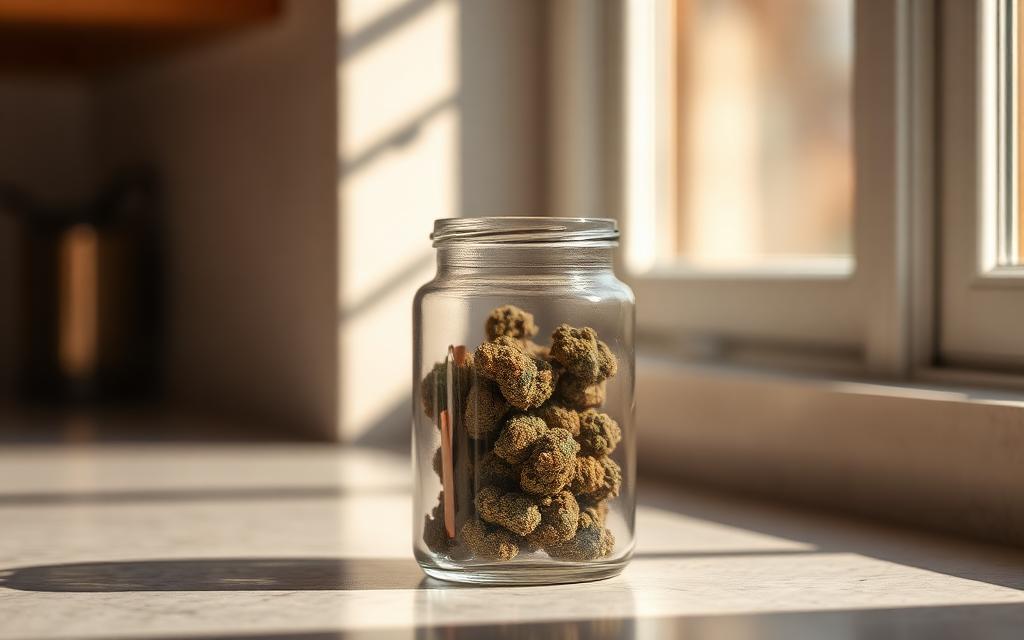
Walk into almost any successful cannabis facility and you'll hear the same line: "We make great product." And they probably do. The flower is beautiful, the extracts are potent, customers love the brand, and sales are climbing.
But here's the uncomfortable truth: a great product doesn't necessarily mean you have a great business. Some of the best cannabis products in the country come from companies with weak documentation, inconsistent processes, thin training, and quality systems held together by a handful of experienced employees. That works, until it doesn't.
As the industry moves toward greater federal oversight and institutional investment, the companies that thrive won't simply have the best products. They'll have the best systems.
Quality Is More Than Potency
For years, quality in cannabis has been measured by THC percentage, terpene profile, appearance, aroma, moisture content, and lab results. Those things matter, but that's product quality.
Regulators, investors, insurers, and pharmaceutical partners evaluate something much broader: business quality. Can your organization produce the same result every time? And can you prove it?
Consistency Beats Perfection
Anyone can produce an exceptional batch. World-class companies produce an exceptional batch every time, and that's a very different challenge. Consistency comes from systems, not luck: standardized operating procedures, employee training, equipment maintenance, environmental controls, supplier qualification, batch documentation, process verification, and continuous improvement.
Without those systems, quality depends on individual people rather than the organization itself. That's a dangerous place to be.
The Hidden Quality Gap
Most companies don't realize how wide the gap is between state compliance and internationally recognized quality standards. A facility can pass every state inspection while still lacking the elements that define a mature operation, formal change control, internal audit programs, CAPA processes, supplier qualification, equipment calibration, preventive maintenance, document control, management review, risk assessments, and data trending.
None of these make a flower look better. All of them make the business better.
Great Employees Shouldn't Be Your Quality System
Many companies unknowingly rely on a few experienced people to keep operations running. When those individuals leave, retire, or simply have a bad day, quality becomes unpredictable.
A mature Quality Management System ensures that knowledge belongs to the organization, not the individual. Well-documented systems let new employees perform consistently because success no longer depends on memory, it depends on process.
Quality Is Risk Management
Every quality failure creates risk. A mislabeled package, a missed sanitation step, a skipped equipment inspection, an undocumented deviation, an untrained employee—each one raises the odds of a recall, a customer complaint, regulatory enforcement, a worker injury, lost inventory, an insurance claim, or lasting brand damage.
Strong quality systems don't eliminate risk. They reduce it before it becomes expensive.
Documentation Creates Trust
The biggest difference between emerging cannabis companies and mature pharmaceutical manufacturers isn't intelligence, it's documentation. When something goes wrong, pharmaceutical companies answer fast because they have records: what happened, who performed the work, what equipment was used, who was trained, what changed, and what corrective action followed.
If your only answer is "I think that's what happened," you've already lost credibility. Documentation protects your business long after memories fade.
Federal Reform Will Raise the Bar
Whether cannabis ultimately falls under expanded FDA oversight, DEA registration requirements, or some other federal framework, one thing is certain: expectations around quality will rise. Federal regulators don't judge quality by the finished product alone, they judge the systems that created it.
Can your business demonstrate controlled documentation, repeatable processes, employee competency, risk management, continuous improvement, and management oversight? Those questions only grow more important as the industry matures.
Investors Are Looking Beyond the Product
Institutional investors don't just ask whether your products are good, they ask whether your business is sustainable. A company built on undocumented processes, key-person knowledge, and reactive problem-solving is hard to scale. A company built on disciplined systems, measurable performance, and continuous improvement is far more attractive. Quality systems reduce uncertainty, and investors pay for predictability.
Better Quality Leads to Better Insurance
Insurers think the same way. They don't insure your best harvest; they insure your ability to consistently avoid losses. Organizations with mature operational controls present lower risk because they demonstrate better training, fewer preventable incidents, stronger documentation, more reliable maintenance, and sharper incident investigations.
Quality and risk management aren't separate disciplines. They're two sides of the same coin.
Closing the Quality Gap
Closing the gap doesn't mean becoming a pharmaceutical company overnight. It starts with building systems that support consistency. Ask yourself: Are our procedures standardized? Can we prove our employees are competent? Do we investigate root causes? Are we measuring performance? Are we preventing problems, or just reacting to them? Could we defend our processes during a federal inspection?
If the answer to several of those is "not yet," you've just identified your next opportunity.
The Bottom Line
Making great cannabis is no longer enough. The future belongs to businesses that can produce great cannabis consistently, document it, improve it, and prove it. That's the difference between a successful product and a world-class company, and the companies investing in quality systems today will be the ones best positioned for tomorrow's regulations, partnerships, capital, and insurance markets.
Great product gets you noticed. Great systems keep you in business.
Build a Business as Strong as Your Product
At Red Wolf Risk, we help cannabis operators close the gap between product quality and business quality. By integrating Quality Management Systems, operational risk management, ISO 9001 principles, cGMP best practices, and insurance optimization, we help companies build organizations that are more resilient, more efficient, and better prepared for what's next. Because in tomorrow's cannabis industry, quality won't be judged only by what's in the package, it'll be judged by the systems behind it.
Alex Hearding is the Founder and President of Red Wolf Risk and has more than 17 years of experience in cannabis operations, risk management, quality systems, and regulatory compliance.
About the author
Written by Alex Hearding, founder of Red Wolf Risk. This piece is part of Chronic Risk, the insights publication of Red Wolf Risk.