Signed in as:
filler@godaddy.com
Signed in as:
filler@godaddy.com
As cannabis markets evolve and international opportunities expand, cultivation quality is becoming increasingly important. Operators seeking to prepare for pharmaceutical partnerships, EU-GMP supply chains, federal oversight, and long-term market competitiveness should begin with GACP.
At Red Wolf Risk, we help cannabis cultivators implement Good Agricultural and Collection Practices (GACP) to improve quality, consistency, traceability, and operational maturity.
GACP is widely recognized as the foundation of pharmaceutical cannabis cultivation programs and often serves as the first step toward GMP readiness.
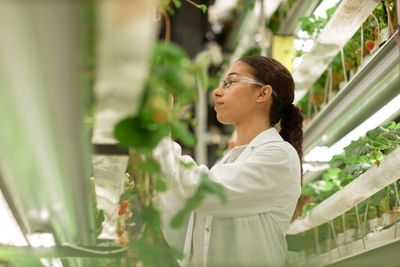
GACP (Good Agricultural and Collection Practices) is a quality framework designed to ensure medicinal plants are cultivated, harvested, processed, and stored in a manner that preserves quality, safety, and consistency.
GACP focuses on:
The objective is to create consistent, reproducible cultivation processes that support downstream manufacturing and quality requirements.
Historically, cannabis cultivation has focused on yield, potency, and state compliance. However, pharmaceutical and international markets place greater emphasis on consistency, documentation, and quality systems.
GACP helps cultivators:
✓ Improve product consistency
✓ Strengthen traceability
✓ Reduce contamination risks
✓ Standardize cultivation practices
✓ Improve recordkeeping
✓ Support GMP programs
✓ Prepare for international opportunities
✓ Strengthen investor confidence
✓ Improve operational discipline
✓ Build a foundation for federal readiness
For many operators, GACP represents the bridge between traditional cannabis cultivation and regulated pharmaceutical supply chains.
Indoor, greenhouse, and outdoor operations seeking greater consistency and quality control.
Organizations preparing for GMP implementation or future pharmaceutical partnerships.
Companies pursuing EU-GMP pathways often begin with GACP-compliant cultivation practices.
New facilities seeking to establish quality systems from day one.
Organizations that want to align with recognized international cultivation standards before regulations evolve.
Good Agricultural and Collection Practices for Medicinal Plants
Guidelines for medicinal plant cultivation and pharmaceutical supply chains.
Many global medical cannabis programs incorporate GACP as a prerequisite for GMP manufacturing.
Facilities should identify and manage environmental factors that may impact product quality.
Examples include:
Operations should establish documented procedures for:
Consistency is a key objective.
Employees should receive training appropriate to their responsibilities.
Training often includes:
Documented harvest procedures help ensure:
Post-harvest activities must be managed to preserve quality and minimize contamination risks.
Programs typically address:
Every batch should be traceable from cultivation through harvest and transfer.
Traceability supports:
GACP relies heavily on documented procedures and records.
Examples include:
Employees rely on tribal knowledge rather than documented practices.
Records may be incomplete or inconsistent.
No structured process for verifying competency.
Procedures lack approvals, revision history, or distribution controls.
Limited documentation of key cultivation conditions.
Problems are fixed but not formally investigated or documented.
Limited evaluation of vendors that impact product quality.
We compare your current operation against recognized GACP principles and identify opportunities for improvement.
Deliverables include:
We help establish procedures for:
We help integrate GACP into broader quality programs, including:
We develop training systems that support competency, accountability, and documentation requirements.
We conduct readiness reviews designed to identify gaps before customers, partners, regulators, or certifying organizations do.
One of the most common misconceptions is that GACP is only relevant to international operators.
In reality, GACP helps establish many of the cultivation controls that may become increasingly important as cannabis moves toward greater federal oversight.
Organizations implementing GACP today are often better positioned to:
The strongest cannabis quality programs often follow this progression:
GACP
Build cultivation quality and traceability.
↓
ISO 9001
Establish organization-wide quality management systems.
↓
GMP
Implement manufacturing and product quality controls.
This framework creates a scalable pathway toward operational maturity and federal readiness.
Our Quality Management System supports GACP implementation through:
The platform simplifies documentation while improving accountability and readiness.
Many agricultural consultants understand cultivation.
Many GMP consultants understand manufacturing.
Few understand how cultivation quality systems fit into the evolving cannabis regulatory landscape.
Led by Alex Hearding, Red Wolf Risk combines:
We help operators build practical systems that improve both compliance and business performance.
Please reach us at alex@redwolfrisk.com if you cannot find an answer to your question.
GACP stands for Good Agricultural and Collection Practices, a framework designed to ensure medicinal plants are cultivated and handled consistently and safely.
Requirements vary by jurisdiction and market. However, GACP is widely recognized as a best practice and is often expected in pharmaceutical cannabis supply chains.
GACP focuses on cultivation and harvesting practices, while GMP focuses on manufacturing and product processing activities.
Yes. GACP principles can be applied to indoor, greenhouse, and outdoor cultivation operations.
Most EU-GMP supply chains expect cultivation programs to follow GACP principles before cannabis enters GMP manufacturing environments.
Most cultivation operations require between 3 and 9 months depending on operational complexity and existing systems.
Yes. GACP helps standardize cultivation practices, improve consistency, strengthen traceability, and reduce contamination risks.
A GACP gap assessment is typically the best starting point. This evaluation identifies strengths, weaknesses, and opportunities for improvement before implementation begins.
Yes. Documented cultivation systems, traceability, training, and quality controls often demonstrate operational maturity and reduced risk.
While future requirements remain uncertain, GACP establishes many of the cultivation controls commonly found in regulated agricultural and pharmaceutical industries.
Whether your goal is federal readiness, pharmaceutical partnerships, EU-GMP opportunities, investor confidence, or operational excellence, Red Wolf Risk can help
We use cookies to analyze website traffic and optimize your website experience. By accepting our use of cookies, your data will be aggregated with all other user data.